A Razor's Edge
In this edition: Bob Dylan, the best of 2025, and a new book!

Musings
This will probably come as a surprise to absolutely no one, but I am something of an old soul. I have a graying beard and a grumpy disposition. I like card games, reading books in a comfortable reclining chair, and going for walks. I spend lots of time, more time every single year, complaining about “kids these days.” I am basically a Gen-Xer trapped in a Millennial body.
Yet if I had to pick the oldest thing about me, the thing that really showcases my inner sexagenarian, its my love of Bob Dylan. I could go on and on about the things I love about Dylan—his surreal and cryptic approach to songwriting, his unapologetic willingness to experiment with style, his enigmatic persona—but instead I’d like to take a step back and walk through how this relationship developed and changed over the years, and how following our interests can yield interesting artistic results.
I discovered Dylan when I was in high school, during a time when most of my chosen records were limited to pop-punk/emo, rap, and the many one-hit wonders who tried to combine those genres. I liked music that was angry while also being catchy, that was full of heartbreak, righteous indignation, and reassurances that I never had to grow up and have real responsibilities. I had an entire binder of CDs that fit well into these genres, but the problem was that my first car, a Ford Taurus, didn’t have a CD player. It only had a cassette player, and the bands I liked to listen to weren’t making cassettes.
I couldn’t just drive around listening to the Backstreet Boys on the radio, so I started looking through the bins at local thrift stores and adding a small collection of random cassettes. This turned out to be one of those little things that paid big dividends; it not only expanded my taste in music but opened me up to the very idea of artistic work from older generations. I listed to Jefferson Starship, the Grateful Dead, Cream, the Rolling Stones, and countless other musicians whose names I recognized but whose music had never graced my ears.
However, there was nothing that got more play than The Essential Bob Dylan, a collection of ten songs that I now know compromise some of his most iconic songs up through Blonde on Blonde. The track list:
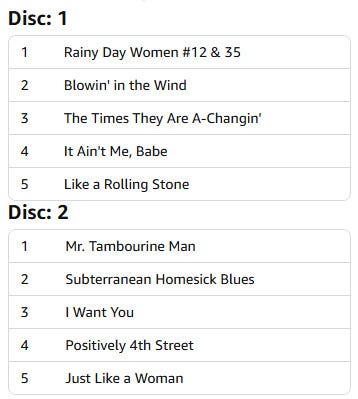
These songs also had heartbreak, righteous indignation, and confident declarations that the world of his generation would be different, but these songs were deeper, opaquer, and a little less sure of themselves. And while this is a far cry from the diversity he would embrace in the later part of his career, the styles here felt robust; the cassette started with the raucousness of “Rainy Day Women #12 & 35” before descending immediately into the soft wisdom of “Blowin’ in the Wind.” I had never heard anything like it. I was hooked.
In the 20 or so years since, I’ve continued to be a fan. I’ve visited a Dylan exhibit at the Museum of Pop Culture in Seattle, seen him perform live in Fresno, and made a pilgrimage to his mural in Minneapolis. But in 2020, as a pandemic was ravaging the country, Dylan released Rough and Rowdy Ways, his first album of original songs in eight years, and it occurred to me at that point that for all the time I had been a fan, I had exposed myself to only a narrow sliver of his discography. So I gave myself a project of listening to his entire catalogue of work, all 40 studio albums.
A lot of things happened because of that journey: I discovered treasured albums from eras I had not explored, including a new favorite (Blood on the Tracks); I learned that even the best artists put out stinkers (Under the Red Sky, among quite a few others); and, perhaps most notably, I found Dylan sneaking himself into my writing, cautiously at first, and then with full-blown enthusiasm.
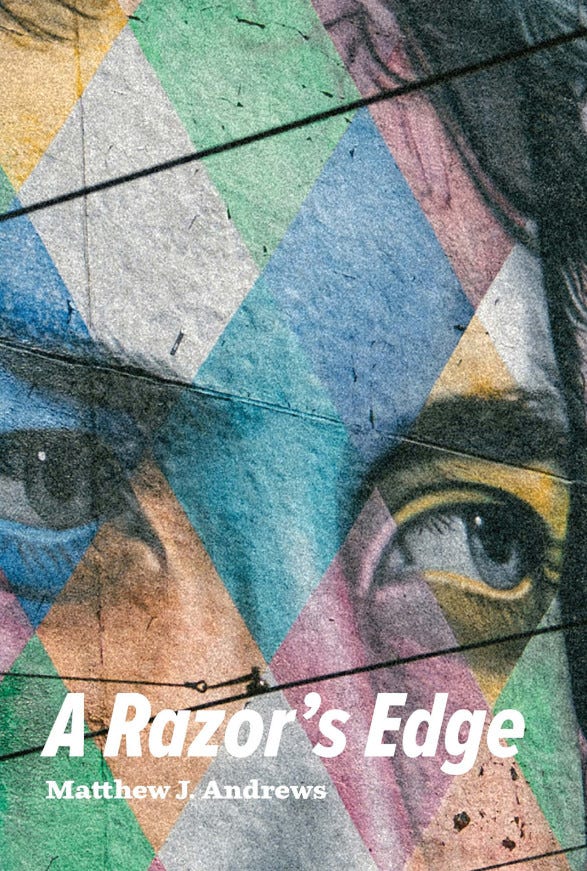
To bring this to a conclusion, the end result of Dylan’s intrusion into my writing is a new chapbook, A Razor’s Edge, which officially comes out February 1st but is available to order now. This collection is a new artistic direction for me; it features surreal prose poems, all of which feature Dylan and are based (some very loosely) around one of his songs. As Dylan and I took this journey together, I found myself using these works to, in the words of the book’s summary, “interrogate the tangled relationships between artists, their work, and their audience.” It’s a project I’m proud to unveil to the world.
In summary: follow your weird obsessions, enjoy them, and give them freedom to permeate your art. The results might surprise you.
Curation
With 2025 firmly in the rearview mirror, I figured that I would recap some of my favorite reads from this past year. When I organize my books, I tend to do so in four categories (nonfiction, fiction, faith/spirituality, and poetry), and for that reason, that’s how I will lay them out here. I’ll feature one beloved book and then add in some honorable mentions:
· General Nonfiction: Four Thousand Weeks: Time Management for Mortals by Oliver Burkeman. Rare is the time management book that advises, quite bluntly, “that what you do with your life doesn’t matter all that much—and when it comes to how you’re using your finite time, the universe absolutely could not care less.” This is an anti-productivity book, one that takes a few large steps back to talk about finitude and mortality, to philosophize on the very nature of time, and to encourage a humane approach to work that focuses principally the quality of life. Honorable mentions: The Notebook: A History of Thinking on Paper by Roland Allen; Nuclear War: A Scenario by Annie Jacobsen; The Explorer’s Gene: Why We Seek Big Challenges, New Flavors, and the Blank Spots on the Map by Alex Hutchinson; and In My Time of Dying by Sebastian Junger.
· Faith/Spirituality: Acedia & me: A Marriage, Monks, and a Writer’s Life by Kathleen Norris. This book forced itself into my life at the exact moment I needed it to. I had never even heard of acedia (which Norris defines as the temptation to “feel bored, apathetic, and despondent about meaninglessness of life” and elsewhere describes as the “noonday demon”), but every page felt like it was speaking to me personally, and maybe to our age more generally. Full of theological and anecdotal wisdom, this was an excellent read. Honorable mentions: Backpacking with the Saints: Wilderness Hiking as Spiritual Practice by Belden C. Lane; The Essential Writings of Christian Mysticism edited by Bernard McGinn; Knock at the Sky: Seeking God in Genesis After Losing Faith in the Bible by Liz Charlotte Grant; and The New Testament: A Translation by David Bentley Hart.
· Fiction: War and Peace by Leo Tolstoy. I’ve always struggled with long fiction, and when I set a goal this past year of reading at least three classic Russian novels, it was in part to force myself to persevere through some verbose works. I expected this one to be the most difficult, but I was pleasantly surprised by how much I enjoyed it. The sweeping nature of it and what it had to say about history as a subject made the length feel earned—dare I even say necessary—and the various protagonists felt relevant to our modern times. A classic for a reason! Honorable mentions: The MANIAC by Benjamin Labatut; The Martyred by Richard E. Kim; People of the Book by Geraldine Brooks; and To Kill a Mockingbird by Harper Lee.
· Poetry: Heating & Cooling: 52 Micro-Memoirs by Beth Ann Fennelly. Even for someone who clearly loves prose poetry, I’ll own that the poetry label for this book is flimsy at best. But whatever genre you chose for this memoir-in-vignettes, it’s a fun and engaging read. I loved the wholesale reimagination of the concept of memoir, one that sort of invites you into the white spaces and asks you to draw your own threads between disparate narratives. Honorable mentions: Kitchen Hymns by Pádraig Ó Tuama; Andalusian Hours: Poems from the Porch of Flannery O’Connor by Angela Alaimo O’Donnell; Four Quartets by T.S. Eliot; and With My Back to the World by Victoria Chang.
Finally, if music is more your thing, here’s a Spotify playlist with some songs I enjoyed from this year. Happy listening!
Happenings
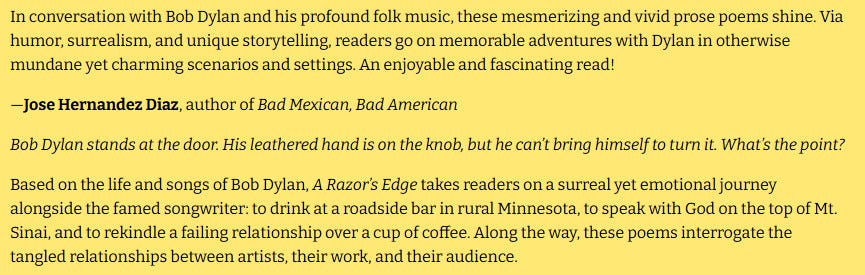
· As noted in this edition’s (admittedly long) musing, I have a new chapbook, A Razor’s Edge, available for purchase now from Rockwood Press! Get yourself a copy from Rockwood’s website, and then, if you’re so inclined, give it a review over on Goodreads. Here’s some information from the back of the book, including a blurb from the prose poem master, Jose Hernandez Diaz!
· If you want a little preview of A Razor’s Edge, three poems from the book originally appeared in Pithead Chapel, and you can read them here. There’s also an official Spotify playlist to accompany the book, so give that a listen!
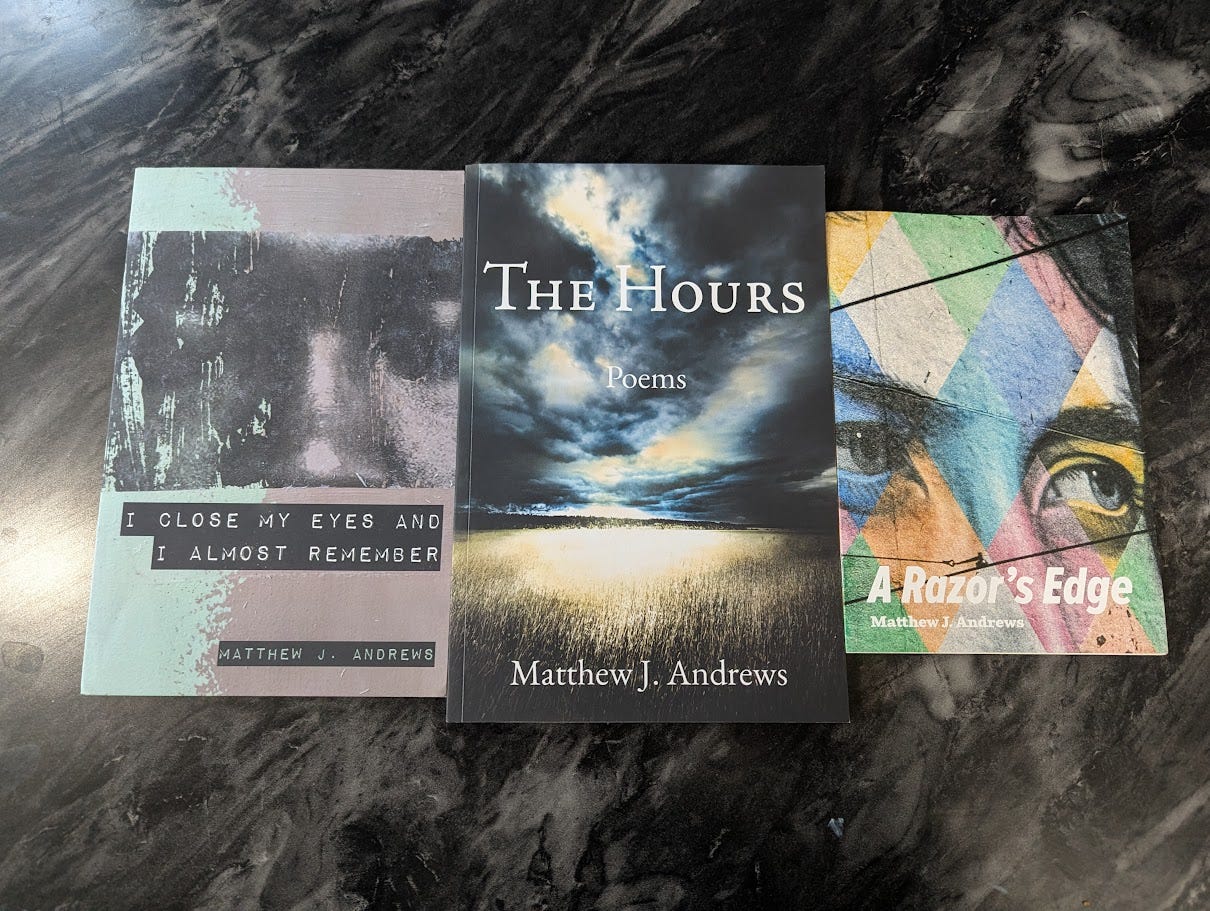
· A Razor’s Edge is my third book of poetry, following the chapbook I Close My Eyes and I Almost Remember and the full-length The Hours. For those who want to immerse themselves in my whole catalogue, give those a read also!
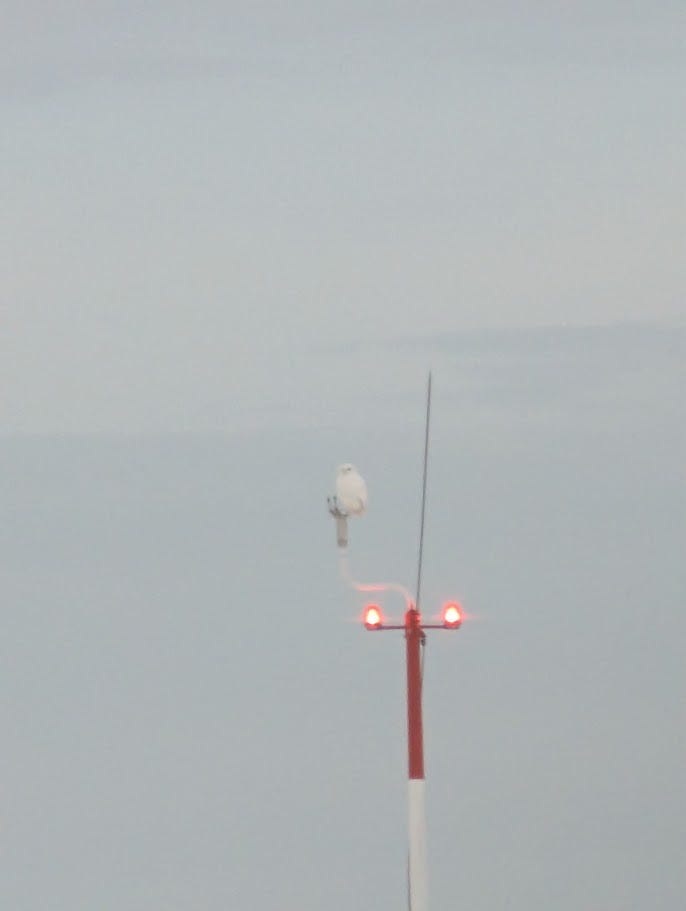
· Lastly, in bird news, 2026 has been all about owls. I woke up just after the new year to a pair of Great Horned Owls hooting in the trees in front of my house, and just a few days later, I braved the frigid Minnesota air to see an elusive Snowy Owl!